Uncategorized

A stream surrounded by trees to its right, beneath a cloudy grey sky.

A Chalk Streams Summons: Hester Pulter’s Amniotic Undersongs

In his 1627 Sylva Sylvarum, Sir Francis Bacon summarised several experiments on the properties of sound, concluding that ‘communication passeth far better throrow [sic] Water than Air’.[1] It is perhaps with this liquid clarity in mind that Hester Pulter (1605?-1678) created the boisterous bodies of water running through her royalist poetry. Her rivers and streams …

A Chalk Streams Summons: Hester Pulter’s Amniotic Undersongs Read More »

Detail from an image of a crowd

Lost in the crowds? Early modern soundscapes, music, and the masses

From a musicological perspective, early modern crowds are a source of both fascination and frustration. We know that large numbers of people attended the many and varied spectacles that punctuated urban life at this time, in light of which it is only logical to assume they must have had an opinion about the plethora of …

Lost in the crowds? Early modern soundscapes, music, and the masses Read More »

Voices from the Past: The Mystery of the Prayer Book Cipher

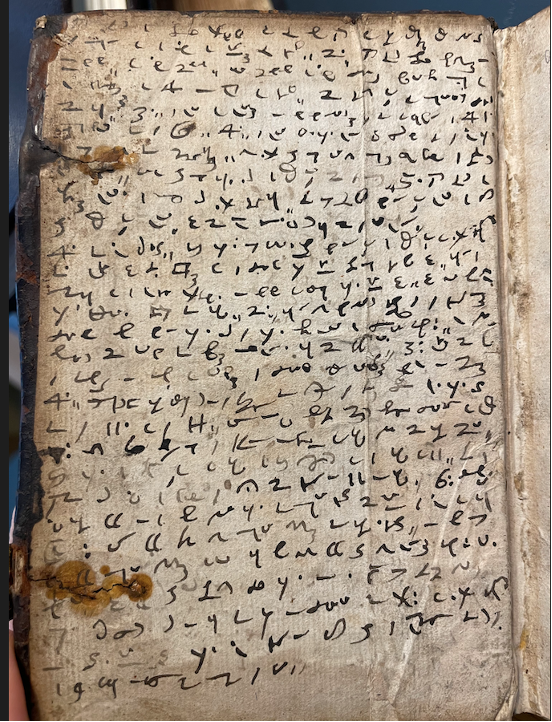
David Rogers writes about his work investigating mysterious symbols discovered in the front of a prayer book by Dr Emilie Murphy.     In September 2021, I was doomscrolling twitter and spotted Dr Emilie Murphy’s tweet asking if anyone recognised this text. I was immediately interested and contacted her to discuss further. Emilie explained that …

Voices from the Past: The Mystery of the Prayer Book Cipher Read More »

David Sterling Brown: Do You Hear What I Hear? Shakespeare, Race and the “Listening Ear”

Wednesday 27 April 2022, 17.30BST   Virtually everyone knows what race looks like. But what does race sound like?  And what does race sound like in Shakespearean drama, on the page or on the stage?  During this talk, Dr David Sterling Brown will discuss, in relationship to Shakespeare’s dramatic literature, the “sonic colour line” and …

David Sterling Brown: Do You Hear What I Hear? Shakespeare, Race and the “Listening Ear” Read More »

At Last, the Leopards

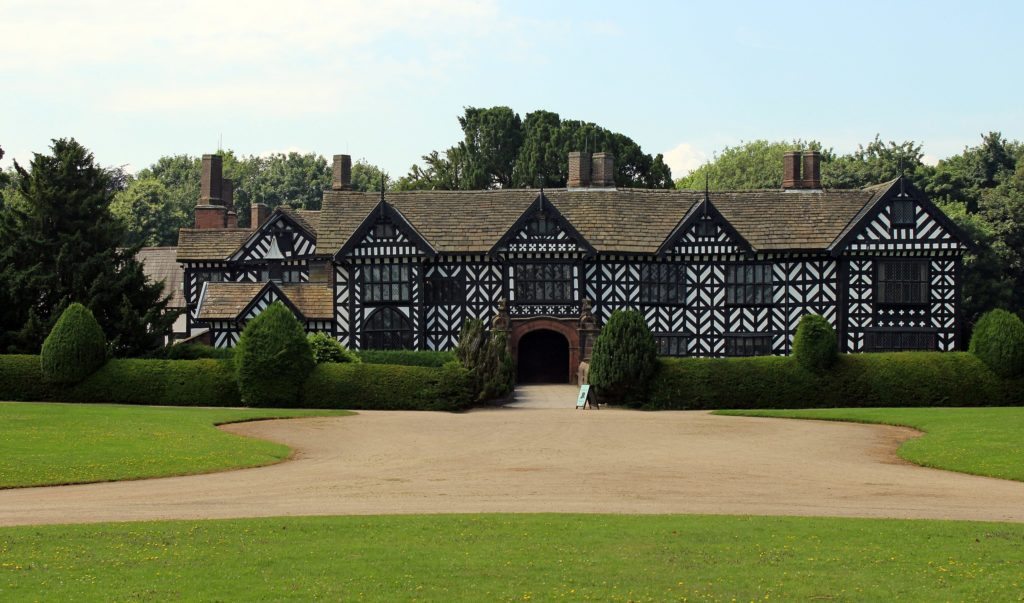
Over the last few years, the soundscapes network has been working with Speke Hall, a National Trust property on the outskirts of Liverpool that was built by the Catholic Norris family in the sixteenth century. The acoustic space of the building connects to the Norris family’s faith: you can read my previous post about the …

At Last, the Leopards Read More »

‘The common folk… live on songs’: Reflections on Hilary Mantel’s Mirror and the Light.

‘The common folk… live on songs’: Reflections on Hilary Mantel’s Mirror and the Light. In this blog, I wanted to share some of my musings on the role of song in Hilary Mantel’s Mirror and the Light, which I chatted about earlier this Summer as part of ‘Cardiff BookTalk’. For anyone that would prefer to …

‘The common folk… live on songs’: Reflections on Hilary Mantel’s Mirror and the Light. Read More »

Cathedral Acoustics in Early Modern England: Exploring and Recreating the Sounds of the Past

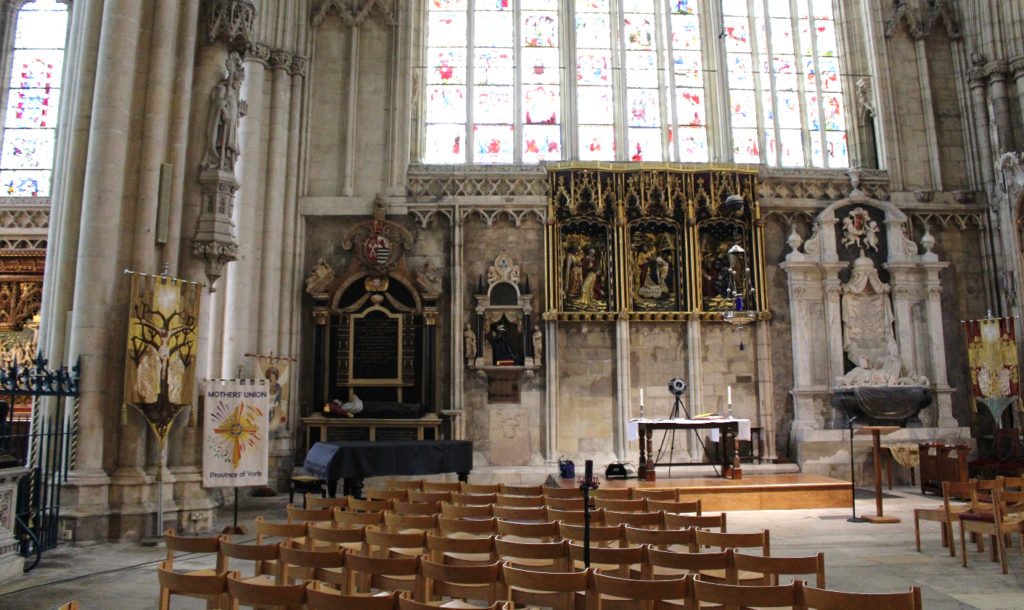
‘Close your eyes, it’s the 17th century and you are awaiting a sermon at the York Minster. Who is speaking? How are they speaking? What are they saying? What does it sound like? What sounds can you hear in the background? These are some of the questions that the field of historical soundscapes studies reflects …

Cathedral Acoustics in Early Modern England: Exploring and Recreating the Sounds of the Past Read More »

Hearing proclamations in seventeenth century Scotland

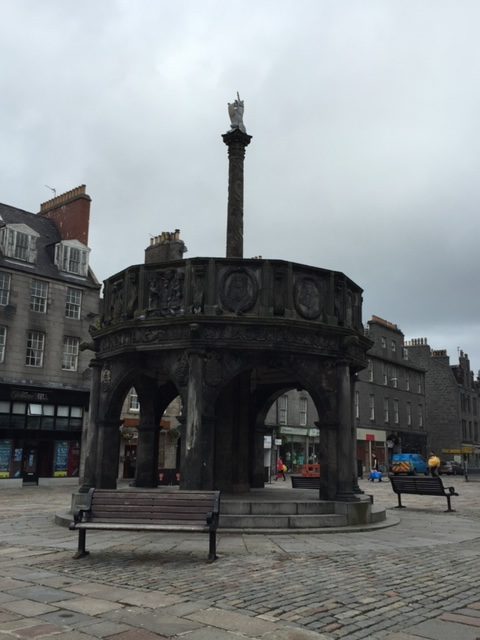
I first looked at proclamations during the middle stages of my doctoral research, after becoming drawn to the way they mirrored the other spoken or ‘performed’ media of later seventeenth-century Scotland that I was already writing about. Like official celebrations, public executions, and even many seditious protests, proclamations were staged at burgh mercat crosses and …

Hearing proclamations in seventeenth century Scotland Read More »

Scroll to Top